AtomCore Industrial Control & Monitoring System

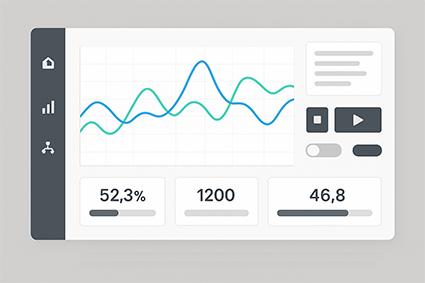
AtomCore Industrial Control and Monitoring System dashboard

Intelligent Control for Connected Industrial Operations

AtomCore Industrial Control & Monitoring System combines a web-based industrial management platform with a supervisory computer application developed using Microsoft WPF. The WPF desktop interface provides operators with responsive equipment screens, real-time process visualization, control panels, alarm displays, trend charts, production data, and maintenance information. It connects PLCs, sensors, robots, conveyors, linear slides, machines, and other industrial devices through a unified control environment.

Core Capabilities

View machine status, operating modes, production counts, process values, device connectivity, and line conditions from one centralized dashboard. Role-based screens can be configured for operators, engineers, supervisors, and management teams.

The supervisory computer interface is developed with Microsoft WPF to provide a powerful Windows desktop HMI for industrial operators. It supports customizable equipment diagrams, animated machine status, real-time parameter display, command controls, alarm windows, historical trends, production dashboards, user permissions, and multi-screen operation. The WPF architecture also allows the UI to be adapted to different machines, production lines, resolutions, and customer workflows.

Collect real-time data from PLCs, controllers, sensors, meters, robots, and production equipment. The system supports continuous data logging, historical records, trend analysis, and traceability for critical production and quality parameters.

Authorized users can monitor equipment and execute approved control actions through the WPF supervisory computer, web browser, tablet, or industrial terminal. The WPF client is optimized for local machine operation and high-frequency screen updates, while the web platform supports remote visibility and management. Interlocks, permissions, confirmations, and audit logs help maintain operational safety and accountability.

Detect abnormal values, equipment faults, communication interruptions, safety conditions, and process deviations. Alarm priorities, acknowledgment workflows, event history, escalation rules, and notification functions help teams respond faster and reduce downtime.

Analyze throughput, cycle time, utilization, downtime, defect rates, energy consumption, and other key performance indicators. Configurable charts and reports help identify bottlenecks, recurring failures, and improvement opportunities.

Integrate industrial devices and production assets through configurable communication interfaces and gateways. The platform can connect with PLC systems, robotic equipment, machine controllers, vision systems, sensors, conveyors, and material-handling devices.

Track runtime, fault frequency, temperature, vibration, current, pressure, and other condition indicators. Maintenance teams can use equipment history and threshold-based warnings to support preventive and predictive maintenance strategies.

Exchange production and equipment data with ERP, MES, quality management, warehouse, business intelligence, and other enterprise systems. APIs and database interfaces help create connected workflows from the shop floor to management applications.

Deploy the software on-premises, at the industrial edge, in a private cloud, or in a hybrid architecture. Its modular design supports pilot projects, individual machines, complete production lines, and multi-site industrial operations.

Benefits for Industrial Operations

Improved Visibility: Present real-time machine, line, and process information through a consistent and easy-to-understand interface.
Faster Response: Detect faults and abnormal conditions immediately, helping operators and maintenance teams take corrective action sooner.
Reduced Downtime: Use alarm history, equipment health data, and performance trends to prevent recurring failures and unplanned shutdowns.
Higher Productivity: Standardize monitoring and control workflows, reduce manual data collection, and support more consistent production performance.
Professional Operator Experience: Use a WPF-based Windows interface with responsive controls, clear machine visualization, multi-monitor support, and layouts customized for each production process.
Scalable Digitalization: Begin with one machine or production line and expand into a connected, data-driven industrial management platform.
Industrial control and monitoring benefits
Scroll